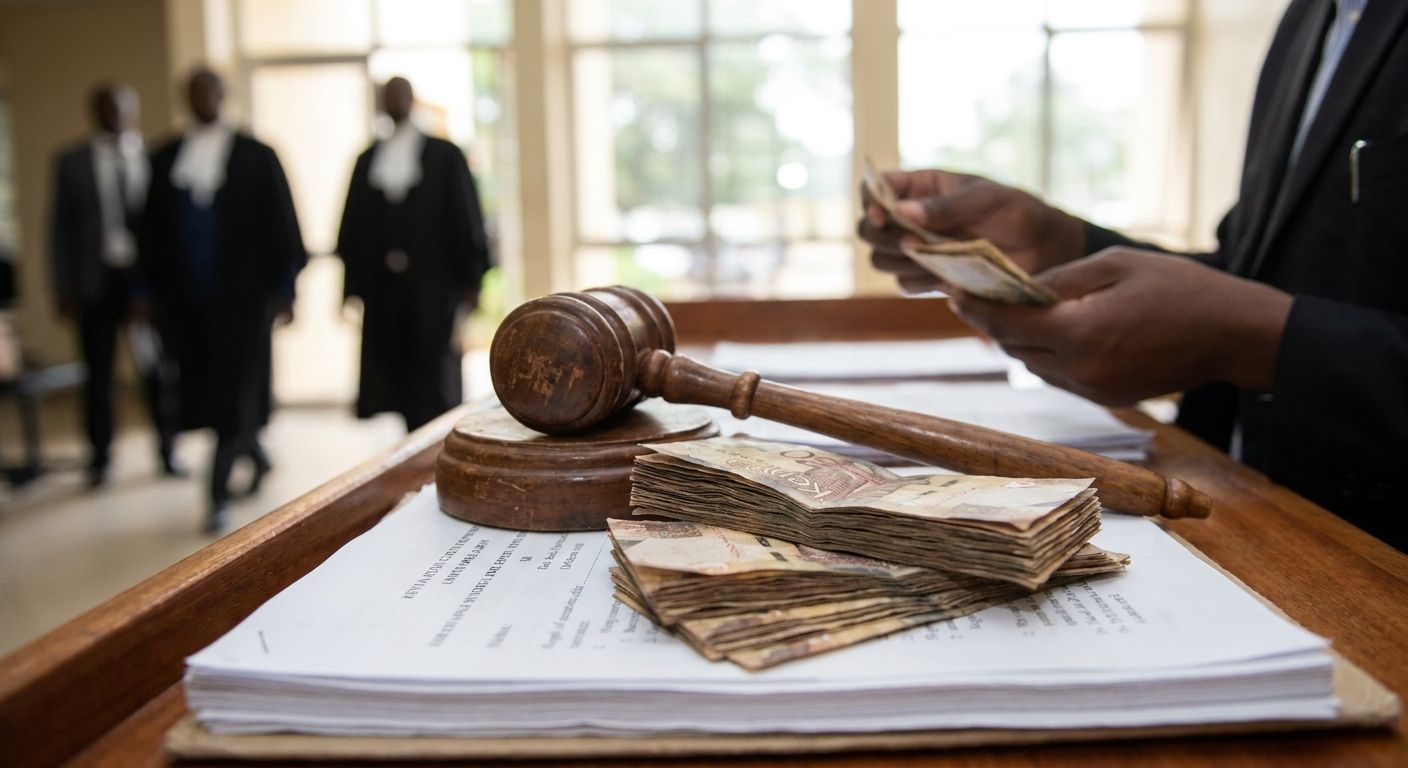
Kenya has no fixed shilling amount for bail — a magistrate or judge sets the figure case by case, and the starting point is Article 49(1)(h) of the Constitution of Kenya, 2010, which guarantees release on bond or bail "unless there are compelling reasons not to be released." The number the court lands on depends on the offense, your flight risk, and whether you've jumped bail before, not a printed schedule you can look up in advance.
- There's no fixed price for how much is bail for a criminal case in Kenya — courts set it case by case under Article 49(1)(h) of the Constitution.
- The Bail and Bond Policy Guidelines, 2015 direct magistrates on the factors that push an amount up or down.
- Cash bail is refundable if you attend every hearing; a personal bond usually needs no upfront cash but carries a forfeiture risk.
- Courts can deny bail entirely for compelling reasons — prior absconding, witness interference, or the gravity of the charge.
- A criminal defense advocate can argue for lower bail terms at the first appearance, which is often the only chance to set the number.
Why this matters
Most people searching this question have someone in custody right now, and every hour matters. Getting the bail amount wrong — or missing the argument that could have lowered it — means more days in remand before the case is even heard.
The bail hearing usually happens at the first court appearance after arrest, sometimes within 24 hours. That's a narrow window to present the factors that work in your favor, and it's exactly where legal advice matters most, not after the amount has already been set.
How much is bail for a criminal case in Kenya?
There's no statutory bail table in Kenya. The Lex Africa platform connects people facing this exact situation with LSK-verified advocates who can assess the charge sheet and advise on what to argue at the hearing, but the amount itself is always a judicial decision made in that specific courtroom, on that specific day.
What the court actually weighs comes from the Bail and Bond Policy Guidelines, 2015, issued by the Judiciary to standardize how magistrates approach the decision. The two main release mechanisms work differently:
| Release type | How it works | Refundable? | Typical use |
|---|---|---|---|
| Cash bail | You or a relative deposits cash with the court | Yes, if all court dates are honored | Common for offenses where the court wants a financial deterrent to absconding |
| Personal bond | You sign a bond promising to appear, often with a surety | No cash upfront, but the bond sum is forfeited on breach | Common for less serious charges or where the accused has strong community ties |
A magistrate can also attach non-cash conditions — surrendering a passport, reporting to a police station weekly, or staying away from a complainant — regardless of which mechanism is used.
Minor offenses: bail usually comes fast
For lower-level charges — traffic offenses, minor assault, petty theft — courts tend to grant bail at the first appearance with minimal argument needed. The amount and conditions are usually modest relative to the charge, and a personal bond without cash is common where the accused has a fixed address and no prior record.
Verdict: for minor offenses, expect bail to be granted quickly, often the same day, with light conditions.
Felony charges: higher scrutiny, stricter conditions
For felonies — robbery, serious assault, fraud involving significant sums — magistrates apply more scrutiny under the 2015 guidelines. Flight risk and the strength of the prosecution's case carry more weight, and cash bail is more likely to be required alongside conditions like passport surrender.
Verdict: for felony charges, come to the hearing prepared with evidence of community ties, employment, and a fixed residence — these are the factors that move the number down.
When courts deny bail entirely
Article 49(1)(h) allows a court to refuse bail where "compelling reasons" exist. In practice, that includes a real risk of absconding, evidence the accused has interfered or will interfere with witnesses, a pattern of prior bail violations, or the sheer gravity of charges like murder or treason. Even then, the accused can reapply for bail later in the proceedings if circumstances change.
Why bail amounts vary so much
- Nature and gravity of the offense — a capital charge draws far more scrutiny than a misdemeanor.
- Flight risk — no fixed address, weak community ties, or travel documents raise the perceived risk.
- Criminal history — prior convictions or previous bail-jumping push conditions up.
- Likelihood of interfering with witnesses or evidence — a real concern in assault and fraud cases involving known complainants.
- Health and personal circumstances — courts can factor in medical needs or caregiving responsibilities.
- Compliance track record — someone who has honored bail terms before is treated differently than someone who hasn't.
“The bail hearing is often the only chance to argue the number down — showing up unprepared at the first appearance is the most expensive mistake in a criminal case.”
What's the difference between bail and bond in Kenya?
Bail generally refers to release on payment of a cash deposit, refunded once the case concludes if all court dates are met. A bond is a signed undertaking to appear, sometimes with a surety who forfeits money only if you fail to show up — no cash changes hands upfront in most bond cases.
Can bail be denied in Kenya?
Bail can be denied under Article 49(1)(h) of the Constitution when the court finds compelling reasons, such as flight risk, witness interference, or the gravity of a capital offense. A denial isn't necessarily final — the accused can reapply as the case progresses or new facts emerge.
What happens if you can't afford the bail amount set by the court?
If the cash bail set is unaffordable, the defense can ask the court to reconsider the amount or request a personal bond instead, arguing factors like fixed residence and lack of flight risk. A criminal defense advocate is best positioned to make that argument at or shortly after the first hearing.
Talk to an advocate before your bail hearing
Book a 15-minute video consultation with an LSK-verified advocate on Lex Africa.
FAQ
How much is bail for a criminal case in Kenya?
There's no fixed amount — a magistrate sets bail case by case under Article 49(1)(h) of the Constitution and the Bail and Bond Policy Guidelines, 2015. The figure depends on the offense, flight risk, and criminal history rather than a published schedule.
Is bail the same as bond in Kenya?
No. Cash bail involves depositing money with the court, refundable if you attend every hearing, while a personal bond is a signed promise to appear that usually requires no cash upfront unless breached.
Can bail be denied in Kenya?
Yes. Courts can refuse bail for compelling reasons under Article 49(1)(h), including flight risk, witness interference, or the gravity of charges like murder or treason.
How long does it take to get bail in Kenya?
Bail is normally addressed at the first court appearance after arrest, which typically happens within 24 hours for most offenses. Complex or serious charges can take longer to resolve.
Is bail refundable in Kenya?
Cash bail is refunded once the case concludes if you've attended every scheduled court date. A forfeited bond or bail deposit happens only when conditions are breached.
Can a first-time offender be denied bail?
Yes, though it's less common — courts look at the offense and compelling reasons rather than criminal history alone. A first-time offender charged with a serious felony can still face stricter conditions.
Do I need a lawyer to apply for bail in Kenya?
You can apply without one, but a criminal defense advocate is better positioned to argue for lower bail conditions at the first hearing, which is often the only real chance to influence the number.
One last thing
The bail figure a court sets in 2026 isn't graded on a fixed scale the way a traffic fine is — two people charged with the same offense in different courtrooms can walk out with different conditions, because the 2015 guidelines leave real discretion to the magistrate hearing the case. That's exactly why preparation for the first appearance matters more than researching "typical" bail amounts online.