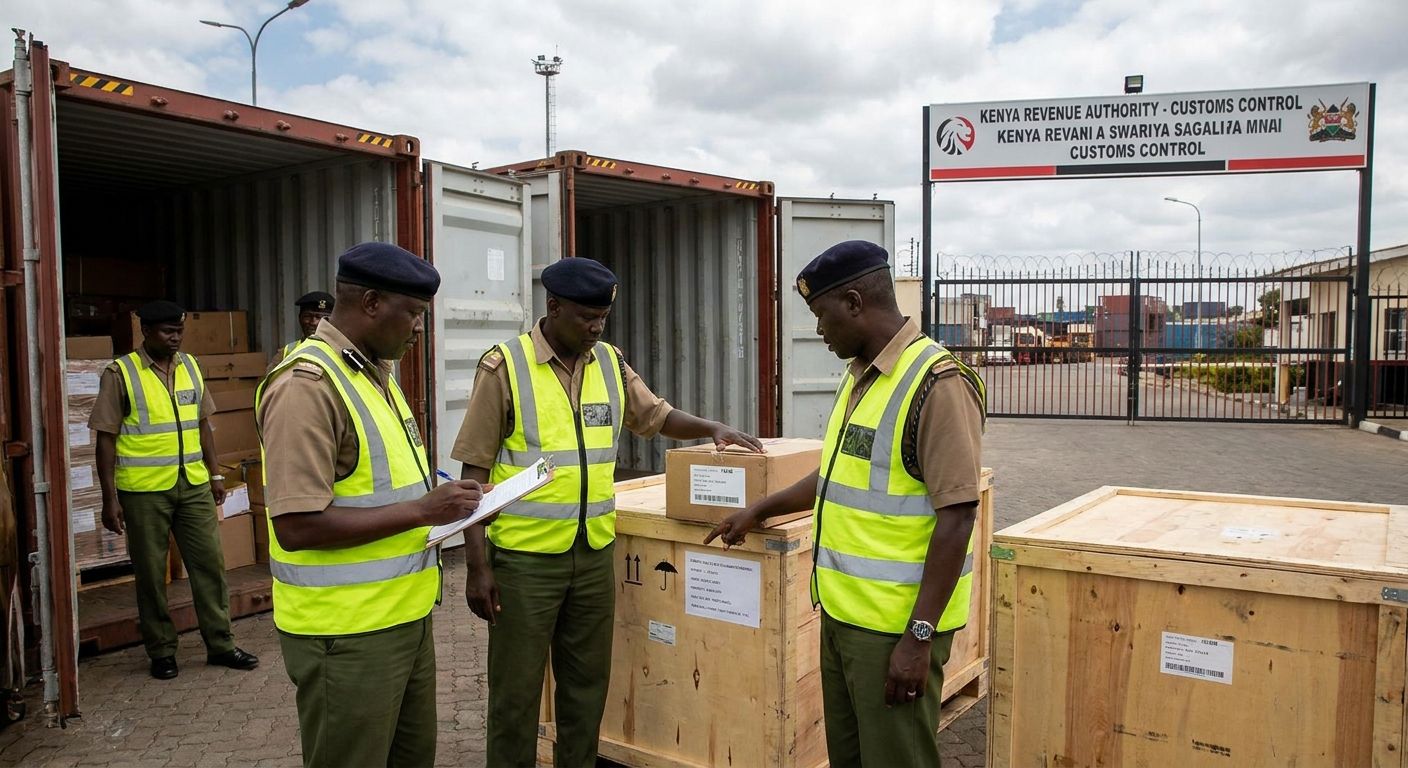
Yes, Kenya Revenue Authority (KRA) customs officers can seize goods on the spot, with zero advance warning, whenever they reasonably suspect uncustomed, prohibited, restricted, or under-declared cargo under the East African Community Customs Management Act, 2004 (EACCMA). The part most importers miss: seizure without notice is legal, but a formal notice of seizure must follow afterward, and storage and demurrage charges at the port keep accumulating while you dispute it — win or lose.
- KRA customs can seize goods without notice in Kenya under EACCMA when fraud or contraband is suspected.
- A formal notice of seizure follows after the fact, never before, under Kenyan customs practice in 2026.
- Storage and demurrage fees pile up at the port while you contest a seizure, even if you eventually win.
- Missing the claim deadline stated in a KRA seizure notice can mean automatic forfeiture of your cargo.
- An advocate familiar with customs disputes can file your claim before that window closes.
Why this matters
A seized shipment is not an abstract legal problem — it's stock sitting in a KRA bonded warehouse in 2026 while your business loses sales and pays storage by the day. Traders who assume they'll get a warning call before customs acts are the ones who miss the claim deadline entirely.
Understanding when customs can act without telling you first, and what happens the moment after, is the difference between a two-week delay and a shipment you never see again. If you import stock for resale, check what import duty small traders pay in Kenya before your next order lands, so an under-declared value doesn't trigger a seizure you didn't see coming.
Can Kenyan customs seize goods without notice?
Customs officers act under EACCMA powers that don't require prior notice — the entire point of a seizure is that advance warning would let goods disappear before an officer gets to them. What differs by scenario is what happens immediately after the seizure, not whether notice comes beforehand.
| Ground for seizure | Notice before seizure? | What KRA does next |
|---|---|---|
| Uncustomed or undeclared goods | No | Detains cargo, issues notice of seizure afterward |
| Prohibited or restricted items | No | Seizes on the spot, may refer the matter for prosecution |
| Suspected undervaluation or duty evasion | Usually surfaces after a post-clearance audit, not at the border | Issues an assessment, then a seizure notice if unresolved |
| Documentation gaps (missing permits, certificates) | Sometimes a query first | May release goods on bond pending correction |
If your business regularly clears cargo through Mombasa or JKIA, get clarity on whether you need a lawyer to import goods into Kenya before a shipment gets flagged, not after.
Uncustomed and undeclared goods
Goods that entered without going through customs formalities, or that were declared with false particulars, are seized the moment an officer identifies the discrepancy — at the port, at a roadblock, or during a warehouse check. No prior notice is required or given. The notice of seizure is issued after the fact, stating what was taken and why.
Prohibited and restricted items
Items banned outright, or restricted without the correct permit, get seized immediately regardless of the importer's intent. This category carries the highest risk of referral for prosecution alongside the civil seizure, since prohibited goods often overlap with criminal offenses under the Act.
Suspected undervaluation or duty evasion
This is the ground that catches small traders most often in 2026. KRA's risk-profiling system flags shipments where declared value looks inconsistent with market price, invoice history, or country of origin. The seizure here usually comes after a post-clearance audit rather than at the point of entry, but once flagged, the goods can still be held without further warning.
Why customs seizures happen without notice
- Advance warning would let importers move, alter, or dispose of contraband before an officer arrives
- EACCMA gives officers authority to act on reasonable suspicion at the point of entry, not on a scheduled visit
- Physical scanning and inspection at ports and airports happens in real time as cargo moves through
- KRA's risk-based audit system flags shipments for review based on declared value, origin, and importer history
- Non-payment or under-payment of duty is often only discovered during a post-clearance audit, well after goods have cleared
- Missing or invalid import documentation (permits, certificates, licenses) triggers an immediate hold
“If you don't file your claim before the deadline stated in the notice of seizure, KRA can treat the goods as forfeited to the state.”
Confirm your claim window is still open
A 15-minute video consult checks your notice of seizure and documents before the deadline lapses.
What happens after KRA seizes my goods in Kenya?
A notice of seizure is issued to the owner or the person the goods were seized from, stating the grounds and giving a window to lodge a claim contesting it. Miss that window and the goods can be treated as forfeited to the state without further process. If you intend to contest, the claim needs to go in writing, and the clock starts running from the date on the notice, not the date you happened to read it.
Can I get my seized goods back in Kenya?
Yes, if you file a valid claim within the deadline on the notice of seizure and can show the goods were properly declared, duty was paid, or the seizure was made in error. Goods held for documentation gaps are often released on bond while the paperwork is corrected, which is faster than fighting a full forfeiture case. Goods tied to prohibited items or confirmed duty evasion are far harder to recover and may involve a parallel prosecution.
How do I dispute a customs seizure in Kenya?
A dispute starts with a written claim to KRA within the deadline stated on the seizure notice, followed by an internal review if KRA rejects the claim. If the internal review doesn't resolve it, the matter escalates to the Tax Appeals Tribunal, and from there to the High Court on points of law. Anyone weighing that route should also check what it typically takes to file a tax dispute in Kenya, since a seizure dispute follows a similar administrative track to other KRA disputes.
KRA's enforcement powers extend beyond seizure at the border — the same authority that can seize undeclared cargo can also freeze a bank account over unpaid tax in parallel, which catches importers off guard when a duty dispute and a seizure happen at the same time.
FAQ
What happens after KRA seizes my goods in Kenya?
KRA issues a formal notice of seizure stating the grounds and a deadline to file a claim. Miss that deadline and the goods can be forfeited to the state without further process.
Can I get my seized goods back in Kenya?
Yes, if you file a written claim within the deadline on the seizure notice and can show duty was paid or the seizure was made in error. Goods tied to prohibited items or confirmed duty evasion are much harder to recover.
How long do I have to dispute a customs seizure in Kenya?
The deadline is stated on the notice of seizure itself and starts running from the date on that notice, not the date you read it. Confirming the exact window with an advocate before it lapses protects your claim.
Can customs seize goods over incorrect declared value?
Yes, undervaluation flagged during a post-clearance audit can trigger a seizure even after goods have already cleared. This usually surfaces later than a border seizure, but the goods can still be held without further warning.
Is a customs seizure the same as forfeiture?
No, a seizure is the initial hold on goods, while forfeiture is the permanent loss of ownership to the state that follows if no valid claim is filed in time. A seizure can be reversed; a completed forfeiture generally cannot.
Can I import goods into Kenya without a lawyer?
Yes, most routine imports clear without legal help, but disputes over value, permits, or a seizure notice move faster with an advocate reviewing the paperwork. The risk rises with shipment value and with how unusual the goods are.
What happens if I ignore a KRA notice of seizure?
Ignoring the notice means the claim deadline passes and the goods are treated as forfeited to the state. There is generally no second notice once that deadline lapses.
Does KRA need a court order to seize goods at the border?
No, customs officers act under statutory powers in the East African Community Customs Management Act, 2004 and do not need a court order to seize goods at the point of entry. A court only gets involved if the seizure is disputed and escalates through the Tax Appeals Tribunal.
One last thing
The detail that trips up most importers isn't the seizure itself — it's that the claim deadline on the notice starts running from the date printed on it, and storage charges at the port don't pause while you gather documents. Read the notice the day it arrives, not the day you get around to it.