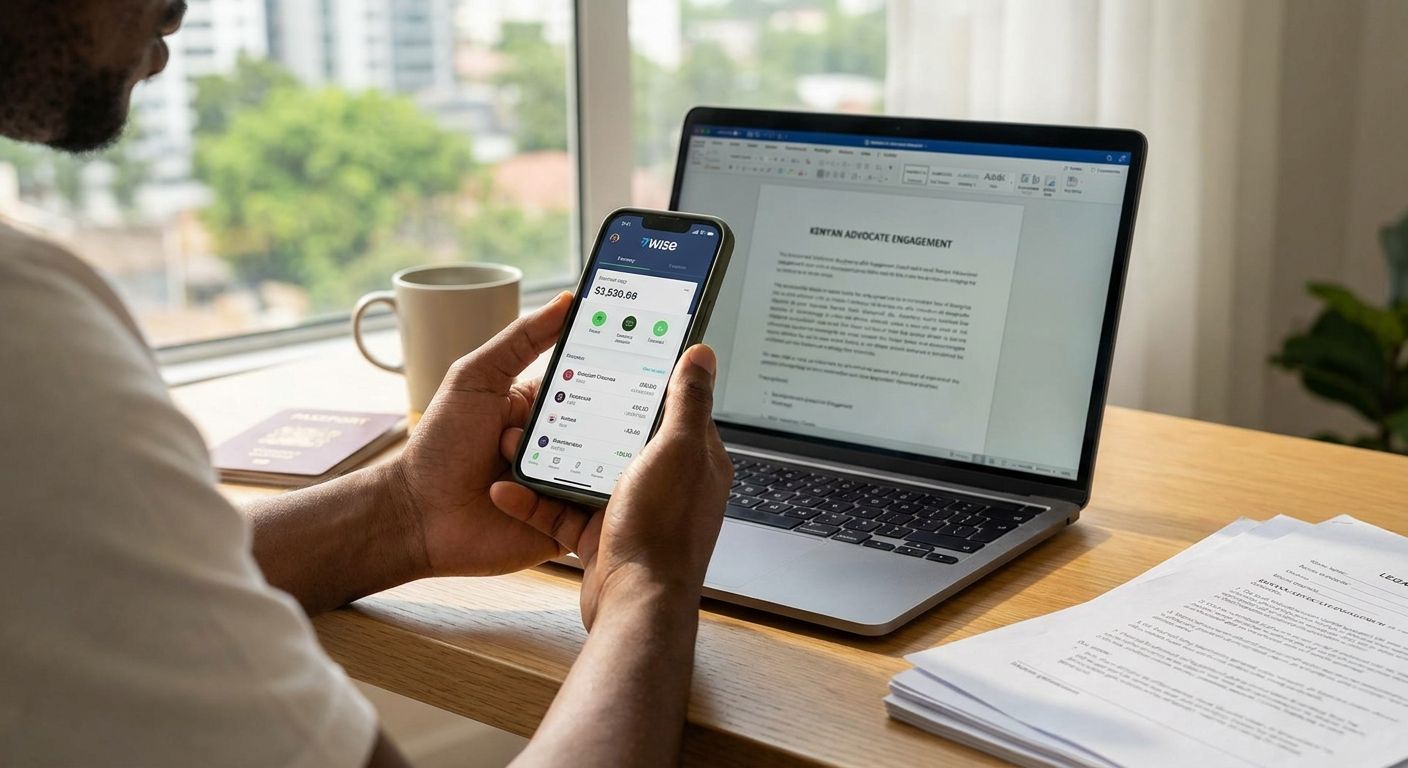
Land purchase for diaspora investors is the process of verifying a title deed, running a land search, and confirming spousal or family consent from outside Kenya, with the aim of closing on a plot without losing money to a fraudulent seller. Buying from London, Minneapolis, Dubai, or anywhere else outside the country changes the mechanics: you cannot walk into a Ministry of Lands office or drive out to inspect a boundary, so verification, payment, and signing have to run through a power of attorney and a local advocate instead of a personal visit.
- A land purchase legal guide for diaspora investors starts with a title search, not a deposit.
- Foreigners can hold leasehold land in Kenya for up to 99 years; freehold agricultural land is restricted.
- A registered power of attorney lets an advocate act for you in Kenya without you traveling.
- Skipping spousal consent checks is one of the most common reasons diaspora land deals collapse in 2026.
- Lex Africa connects buyers with LSK-verified conveyancing advocates for a 15-minute video consultation before money moves.
Why land purchase matters for diaspora investors
You are buying blind, or close to it. Someone else describes the plot, sends photos, and tells you the price is good this week only — that pressure is the exact setup land fraud in Kenya runs on. The land purchase legal guide for diaspora investors starts from a different assumption than a local buyer's guide: you need remote-proof verification at every stage, because you cannot personally confirm anything on the ground.
Kenyan law also treats non-citizens differently on land. Under the Constitution and the Land Act, a non-citizen cannot hold freehold land; land is held on leasehold for a maximum of 99 years instead. Diaspora Kenyans who still hold citizenship are not affected by that restriction, but many hold dual citizenship or have let their Kenyan documents lapse — checking your own legal status before you check the seller's is step zero.
Steps for a diaspora land purchase in Kenya
Verify the title deed before you send a shilling
Do this before you discuss price. A title deed photo sent over WhatsApp proves nothing on its own — titles get photoshopped, and even genuine ones get sold twice to different buyers.
- Request the seller's ID and the original title deed, and cross-check the name, parcel number, and acreage against each other.
- Ask for the seller's KRA PIN and confirm it matches the name on the title.
- Get the exact parcel number and confirm it against county records, not just the seller's paperwork.
- Check whether the parcel has been subdivided recently — a common trick is selling a plot that no longer matches its original title.
- Confirm how to verify a title deed is genuine in Kenya using the official search process rather than trusting a printed certificate.
Run an official land search
A land search at the Ministry of Lands (or through the Ardhisasa digital platform, where the parcel is onboarded) tells you who currently owns the land, whether it is charged to a bank, and whether there is a caveat or dispute registered against it.
- Request the search in the seller's presence or with written authority, since some registries require the registered owner's consent.
- Check the search results for any existing charge, caution, or restriction.
- Confirm the search date is recent — a search from a year ago tells you nothing about a charge registered last month.
- Cross-reference the parcel number on the search certificate against the one on the title deed word for word.
Get a power of attorney drafted and notarized
This is where the client's help matters more than DIY effort. A power of attorney (PoA) lets a Kenya-based advocate sign documents, collect search results, and represent you at the registry without you being physically present.
- Limit the PoA to the specific transaction — never sign a general PoA that lets someone sell or mortgage other assets.
- Have it drafted by a licensed advocate, not a template found online, since land transactions have specific statutory wording requirements.
- Get it notarized and, where the transaction requires it, apostilled or authenticated at a Kenyan embassy or consulate if you are outside Kenya.
- Check whether you actually need a power of attorney to manage property from abroad for your specific transaction before paying for one.
Confirm spousal and family consent
Under the Land Registration Act and the Matrimonial Property Act, a spouse's consent is required before matrimonial land is sold or charged, even if the title is in one spouse's name only. Skip this step and the sale can be challenged and reversed years later, after your money is long gone.
- Ask directly whether the seller is married, and get written confirmation either way.
- Where the seller is married, get the spouse's signed consent as part of the sale agreement, not as an afterthought.
- For land that passed through inheritance, confirm succession is complete and all beneficiaries have signed off.
- Treat verbal assurances from a seller's relative as worth nothing without a document.
Structure the payment and currency transfer
Diaspora buyers lose money on this step even when the land itself is clean, because payment structure gets rushed at the end.
- Use an escrow arrangement or your advocate's client account rather than paying the seller directly and in full upfront.
- Split payment into a deposit tied to search results and a balance tied to registration, not one lump sum.
- Keep formal records of every transfer for both Kenyan tax purposes and your country of residence.
- Confirm bank transfer fees and exchange timing in advance so the amount that lands matches the agreed price.
Bring in a licensed advocate for due diligence and registration
This is the step where trying to save on legal fees usually costs more later. An advocate does the search, drafts or reviews the sale agreement, handles stamp duty assessment, and lodges the transfer at the registry.
- Confirm the advocate is verified by the Law Society of Kenya before engaging them.
- Get a written scope of work covering search, agreement drafting, and registration, not a vague verbal arrangement.
- Ask whether they can work with you remotely by video call, since you will not be visiting their office.
- Check whether it is worth using an advocate for property due diligence on a plot of your specific value and location.
Register the transfer and settle stamp duty
A signed sale agreement is not ownership. Registration at the Ministry of Lands, with stamp duty paid, is what actually moves title into your name.
- Confirm stamp duty has been assessed and paid before the transfer is lodged.
- Get the registered title deed in your name as final proof, not just a receipt for stamp duty.
- If land is agricultural and outside a municipality, confirm Land Control Board consent has been obtained — a transfer without it can be void.
- Keep certified copies of the final title, sale agreement, and search certificate for your own records back home.
Talk to a verified advocate before you pay
Book a 15-minute video consultation before money moves on the deal.
Comparing your options as a diaspora buyer
| Option | Best for | Key limitation |
|---|---|---|
| Relying on a relative's judgment on the ground | Buyers with a trusted, legally literate contact in Kenya | Relies on someone else's read of legal risk, not an independent verification |
| A general real estate agent only | Finding and viewing the property itself | Agents are not required to verify title or flag fraud, and often benefit from a fast sale |
| A licensed conveyancing advocate | Diaspora buyers who need remote verification, PoA drafting, and registration handled end to end | Requires engaging and paying for professional services |
| Land Control Board process (agricultural land) | Any purchase of agricultural land outside a municipality | Consent can be delayed or refused, adding months to closing |
A land purchase legal guide for diaspora investors that skips an independent title search and a licensed advocate is not a shortcut — it is the fastest route to losing a deposit on land someone else already sold.
Common mistakes diaspora investors make
- Wiring the full purchase price before an independent search comes back. Sellers who push for full payment upfront are the most common red flag in diaspora land fraud cases.
- Trusting a relative's word over the land register. A relative who says "the plot is fine, I checked" is not a substitute for a search certificate with a parcel number on it.
- Signing a power of attorney that is broader than the transaction needs. A general PoA can let an agent sell or charge other property you own without your knowledge.
- Skipping spousal consent verification because the seller "is not married." Get this in writing, not as a verbal assurance, since an unregistered claim of marital status offers no protection later.
- Ignoring Land Control Board consent on agricultural land. A transfer completed without it can be declared void years after you have already paid.
FAQ
Can diaspora investors buy land in Kenya without traveling home?
Yes, using a registered and notarized power of attorney that lets a Kenya-based advocate act on your behalf for searches, signing, and registration. You still need to verify the advocate is licensed before granting that authority.
Can foreigners buy land in Kenya in 2026?
Foreigners, including non-citizen members of the diaspora, can hold land on leasehold for up to 99 years but cannot hold freehold land under the Constitution. Freehold agricultural land specifically is restricted to citizens.
How do I verify a title deed is genuine in Kenya?
Run an official land search at the Ministry of Lands or through the Ardhisasa platform and confirm the parcel number, size, and owner name match the physical title exactly. A photocopy or photo of a title deed alone is not verification.
Do I need a power of attorney to buy land from abroad?
In most diaspora land purchases, yes, because you cannot personally sign registry documents or attend in person. The power of attorney should be limited to the specific transaction and drafted by a licensed advocate.
What happens if I skip spousal consent when buying land?
A sale of matrimonial land completed without the spouse's written consent can be challenged and reversed in court, even after registration is complete. This is one of the most common ways diaspora buyers lose land they thought they owned.
How long does a land search take in Kenya?
Search turnaround depends on the registry and whether the parcel is digitized on Ardhisasa, with digitized searches generally faster than manual registry searches. Confirm current turnaround with your advocate before setting a payment timeline tied to it.
Is it worth hiring an advocate for a diaspora land purchase?
Yes for most diaspora buyers, since an advocate handles search verification, sale agreement drafting, stamp duty, and registration remotely on your behalf. The alternative is coordinating each of those steps yourself with government offices you cannot physically visit.
Can I inherit or sell land in Kenya while living abroad?
Yes, both are possible from abroad, though inheritance transfers and sales of inherited land involve additional succession documentation before a transfer can register. A power of attorney is typically needed for either process if you cannot travel.
One last thing
Most diaspora buyers assume a certified copy of the title deed is the strongest proof they can get before paying. It is not — a fresh official search certificate, dated within days of your payment and pulled independently rather than supplied by the seller, is harder to fake and catches charges or caveats registered after the title was printed. Ask your advocate for that search before the deposit, not after.